


Proper base preparation determines whether your Bristol patio will last decades or fail within years. The city’s clay rich soil and frequent rainfall demand specific foundation techniques that differ from other regions.
Bristol’s predominant clay soil expands when wet and contracts during dry spells. This movement creates uneven settling that can crack paving slabs and create dangerous trip hazards without adequate preparation.
Excavation Depth Requirements
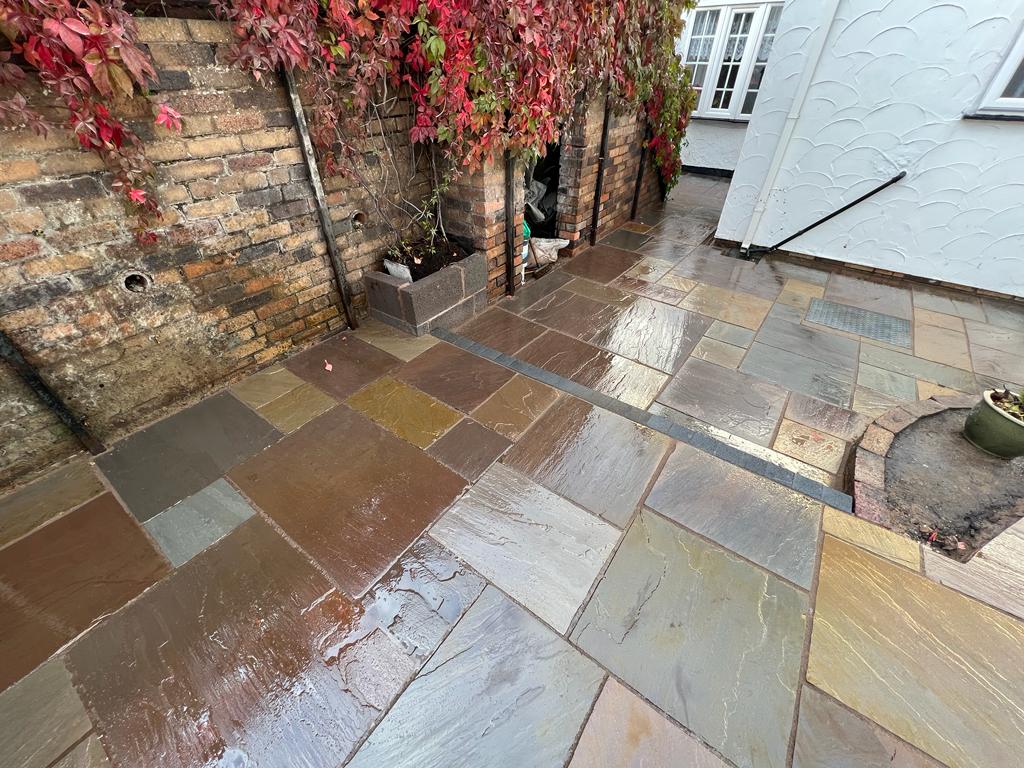
Proper excavation depth is critical for patio longevity. Most installations require digging 150-200mm below the finished surface level. Professional paving contractors ensure adequate depth for sub-base materials, preventing future settlement issues and maintaining structural integrity over time.
Standard patio installations in Bristol require excavation depths of 200mm to 250mm below finished patio level. Clay soils need the deeper end of this range to accommodate proper drainage layers.
Remove all topsoil, vegetation, and organic matter during excavation. Organic materials decompose over time, creating voids that cause settling and structural failure.
Essential Base Layers
Bristol patios require a minimum three layer foundation system:
- 100mm compacted hardcore or crushed stone base layer
- 50mm sharp sand levelling layer
- 40mm concrete slab thickness for natural stone patios
- Additional geotextile membrane on problem clay soils
Drainage Considerations
Install land drains beneath the hardcore layer if your Bristol property sits on heavy clay or experiences waterlogging. Position drains to connect with existing drainage systems or soakaways.
Create a minimum 1:60 fall across the patio surface to direct water away from your property. Steeper gradients of 1:40 work better on clay soils prone to water retention.
Compaction Standards
Each base layer requires mechanical compaction using a vibrating plate compactor. Hand tamping proves insufficient for Bristol’s challenging ground conditions.
Compact in 50mm lifts rather than attempting to compact thick layers in single passes. This method achieves better density and stability for long term performance.